
What a Logan County Current Owner Card Shows
The parcel card from the Logan County PVA is the best public starting point for a current-owner check. It pairs an owner name with the parcel number and account identifiers. Each field has its own job, though. Read the report date, and keep the field labels attached to their values.
| Owner | The person, estate, trust, agency, or entity carried on the assessment card. |
|---|---|
| Mailing | The address used for notices, which can be outside Logan County. |
| Location or situs | The land's displayed street location, which may differ from mailing. |
| Parcel and account | The stable cross-references used to match assessment, map, and tax data. |
| Description and class | Subdivision, lot, acreage, use class, or other assessment clues. |
| Sale reference | Sale date, type, grantor, grantee, and book-page when the card supplies them. |
The owner field is an assessment lead only. A mailing address shows where notices go, while a situs identifies the parcel location. Neither field alone proves possession or occupancy.
Reading Logan County Owner, Mailing, and Situs Fields
The PSC exhibit samples the PVA report format. The formats differ in telling ways. One card lists a situs of JOHN PAUL AVE 0 for Twin Oaks Subdivision Section 2 Lot 2, while another shows JOHN PAUL AVE 111 for Twin Oaks Estates Lot 11. That contrast matters. A plain house-number search can miss a valid Logan County current owner record. When an address stalls, try other keys. Search the road name, owner name, parcel ID, account number, subdivision, or lot wording. Keep the mailing field and the location field separate. A Bowling Green mailing address on a Logan County parcel card does not move the parcel or show where an entity does business. The Logan qPublic information page is the official PVA vendor entry point. Its public Logan page offers no live current-owner query. Coverage dates, export options, query limits, and historical-owner access are not listed there.
Why a Logan County Current Owner Can Lag a New Deed
The PVA and the County Clerk serve different workflows. A deed can be recorded with the Clerk before the PVA refreshes its assessment card. Kentucky also ties property tax responsibility to the owner on January 1, even if the parcel sells later. So a mismatch is a cue to compare dates. It is not proof that either record is false. Check the card's report date, sale table, and book-page lead. Then inspect the newest conveyance the Clerk has indexed. A $0 transfer, correction deed, estate instrument, or multiple-property sale should stay in its stated record type rather than being recast as an ordinary market sale.
Confirming the Logan County Current Owner
Use the parcel card as the index key. The newest deed from the County Clerk is the recorded proof, and each step in between prevents a common name or address mismatch.
- Find the address in Logan PVA/qPublic and copy the owner, parcel, account, situs, mailing, and book-page fields.
- Search that owner as grantee in the Logan County Clerk's eCCLIX index and identify the latest deed tied to the same legal description.
- Read the full deed for grantee names, vesting language, source of title, legal description, execution date, and recording date.
- If the grantee is an entity, compare its exact name with Kentucky Secretary of State filings without treating an officer as the landowner.
- Owner of record
- The party carried as owner in the public record being consulted.
- Vesting
- The deed language stating how and in whom title is held.
- Tenancy
- The form in which multiple grantees hold their interest, if stated.
- Registered agent
- The statutory contact for a business entity, not automatically the property owner.
Verifying a Logan County Entity Owner
A parcel card may name an LLC, public body, trust, or estate instead of a person. Search the exact recorded entity name in the Kentucky Secretary of State Business Search. The interface is simple. It offers a search category, search text, and an active-entities-only option. The officer search takes last, first, and middle names. Filed articles, annual reports, amendments, mergers, assumed names, and dissolution records can explain a name change and supply a registered agent. None of that replaces the deed. An inactive entity can still hold valid land records. An officer or agent is not the beneficial owner. The statewide business search is the official lookup surface for this cross-check.
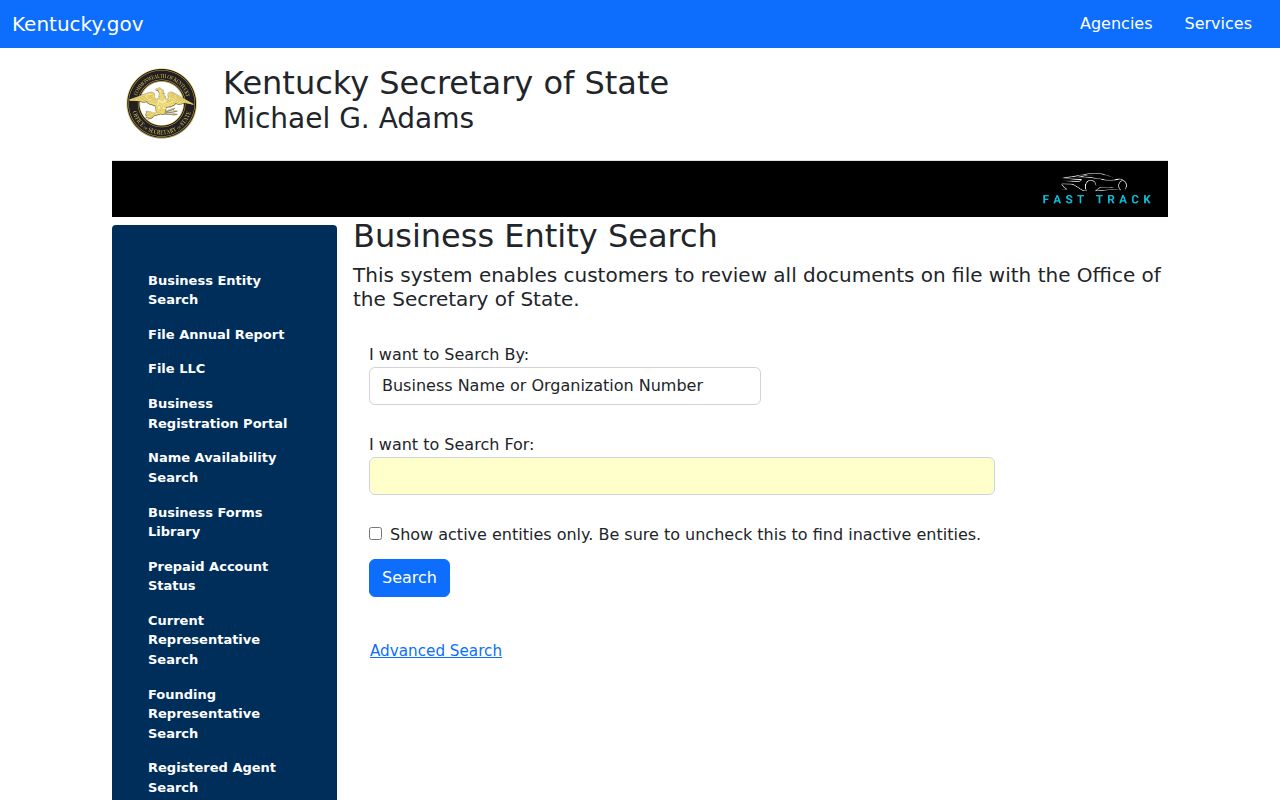
The capture documents the entity-filing route, while title remains a Logan County deed question.
Estate Transfers in a Logan County Current Owner Check
A parcel in Logan County can still show a deceased person as the owner of record long after death. Probate moves slowly. The assessment card only changes once a new deed is recorded. The trail usually runs through several instruments. A will probated in District Court may be one of them. An executor or fiduciary deed may be another. An affidavit of descent under KRS 382.120 also appears in Logan County deed records during this kind of transition.
Begin with the Logan District Court or the Circuit Clerk to find the case file. The probate order there points you toward the follow-up instrument recorded with the County Clerk. An affidavit of descent can be unusually rich. It may list the decedent and the death date. It can also show a spouse, the residence, each heir, their shares, and the full legal description of the parcel. Treat a docket entry or an obituary as a lead only. Neither one vests title on its own. The recorded deed remains the document that matters in a Logan County property search.
DOC ALERT and New Logan County Owner Filings
The County Clerk describes DOC ALERT as a notice service. It flags a deed or mortgage filed under a registered personal or business name. That can help a Logan County current owner spot a new filing quickly. But a name match is not a fraud finding. The alert is not a title report either. The Logan DOC ALERT page handles official signups. Register the exact name you want watched.
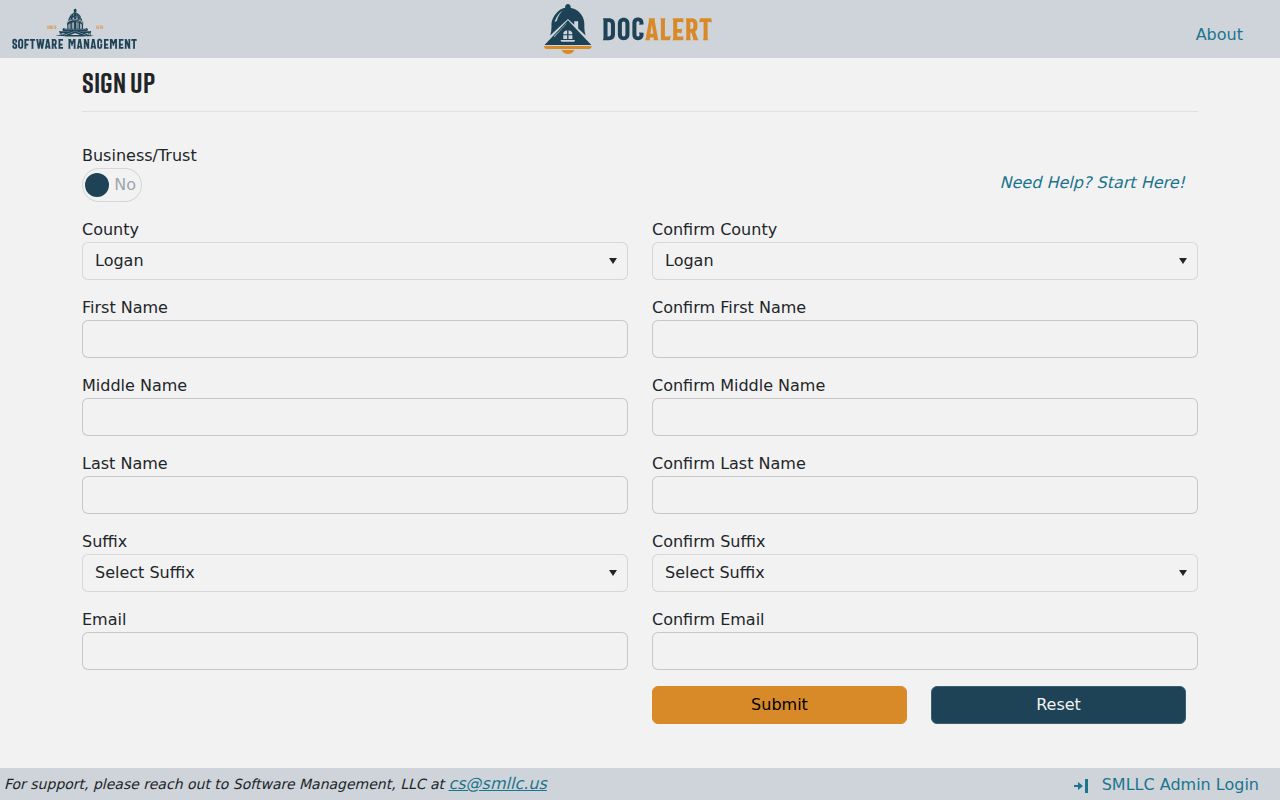
An alert is just a prompt. Pull the actual recorded instrument and confirm the parcel, the parties, and the recording reference.
Safe at Home and Logan County Ownership Records
Safe at Home gives eligible Kentuckians a substitute address. The program does not make real-estate holdings confidential. Public-record exemptions and redactions can still shield specific data under KRS Chapter 61 and other statutes. Never try to reverse a substitute address. Combining unrelated records to infer a protected person's location is just as off-limits. For a deed question, use the parcel and the recorded legal description, and ask the custodian what may lawfully be released.
Contacting a Logan County Current Property Owner
The assessment record lists a mailing address for the owner of record, and that address exists so the county can send official notices. A letter about a specific parcel should name the parcel number clearly. Keep in mind the recipient may not live on the property, and a registered agent may handle the mail without holding title.
Lawful use. Public ownership information can support a purchase inquiry, boundary question, or deed check. Never use it to stalk, harass, intimidate, or expose a protected address.