
Reading Logan County Deed Records by Instrument Type
The Logan County Clerk records far more than plain sale deeds. Each instrument type signals a different kind of transfer or correction, and it points to the related filings a careful reader should check next.
| Deed Type | What It Does | Common Use |
|---|---|---|
| General or special warranty deed | Conveys the stated estate with the warranties written in the instrument. | Ordinary or limited-warranty conveyance. |
| Quitclaim deed | Conveys whatever interest the grantor has without creating broader guarantees. | Family, estate, or title cleanup. |
| Correction deed | Corrects an identified prior deed and explains the reason. | Name, description, or drafting correction. |
| Executor or fiduciary deed | Transfers property through an estate or court-linked authority. | Probate or estate administration. |
| Contract for deed | Records sale terms while title may remain with the seller until completion. | Installment purchase before the final deed. |
Mortgages, easements, vendor's liens, leases, restrictive covenants, assignments, and releases all share the same land-record system in Logan County. Not every one conveys fee title. Read the instrument itself, and then chase down any later release or correction that changes its effect.
Logan County Deeds Online Through eCCLIX
The Clerk's online-records page states one thing plainly. eCCLIX covers Logan County property records from 1980 to current. Private Logan residents may run up to five searches a day for personal, noncommercial use. Commercial use requires a subscription.
A residential signup asks for street, city, state, ZIP, first and last name. It also wants email, phone, username, and password. Those are simply account fields. The Clerk publishes no details on the authenticated grantor-grantee screen. Exact-match rules, filters, pagination, image access, and prices are also left unpublished.
Required Details on Logan County Deed Filings
The Logan County Clerk land-record page lays out the local filing framework. A full transcription should capture parties, mailing addresses, consideration, the legal description, source of title, preparer, return address, signatures, notarization, and the recording reference.
| Recorded detail | Why it matters | Cross-check |
|---|---|---|
| Grantor and grantee | Identifies who gives and receives the stated interest. | Index both name orders and exact entity forms. |
| Consideration | Records the stated transaction amount or basis. | Do not treat every amount as market value. |
| Legal description | Defines the land conveyed. | Match parcel, lot, subdivision, calls, and adjoining owners. |
| Source of title | Points to the grantor's acquiring instrument. | Follow the cited book and page backward. |
| Execution and recording | Separates signing from entry in the public record. | Keep both dates in the chronology. |
The Clerk's land-record guidance covers deeds, mortgages, easements, liens, releases, wills, and descent affidavits in one record family. That range explains what a researcher may encounter in Logan County property records.
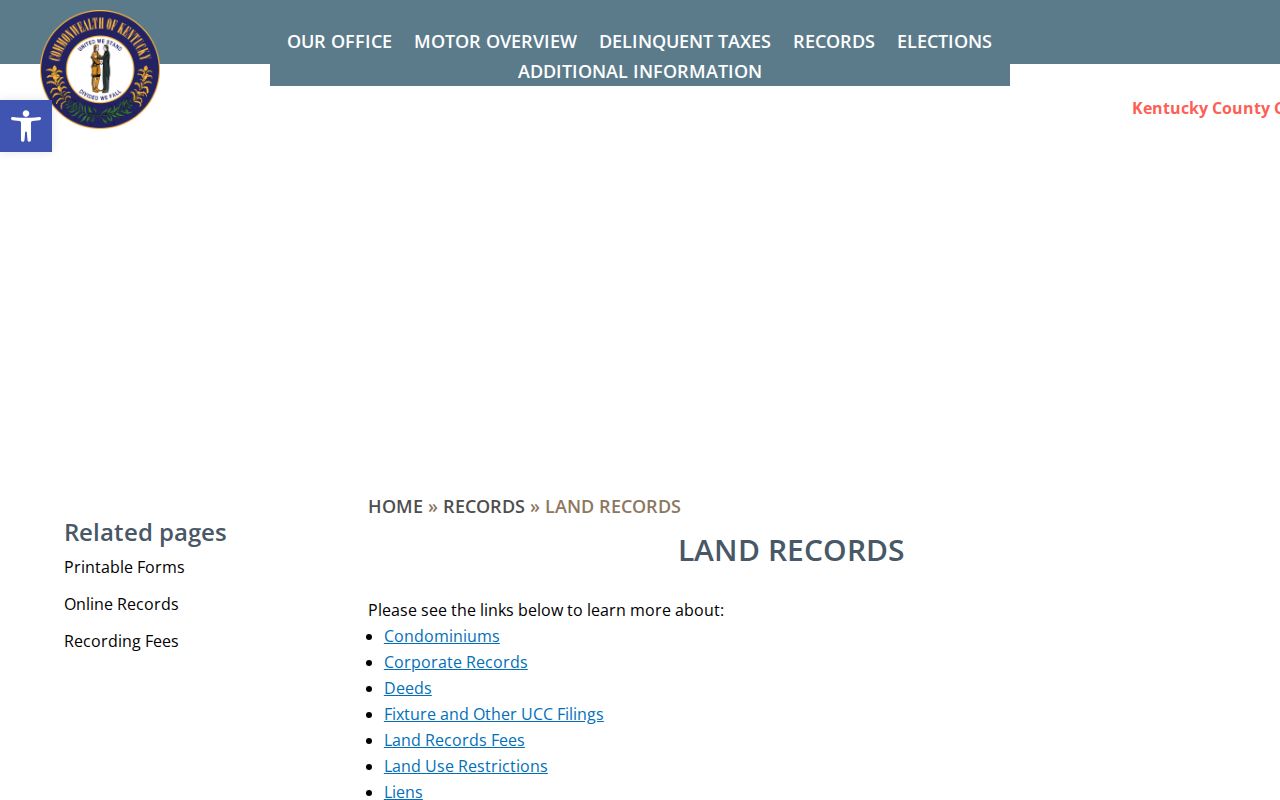
The page itself is only a filing guide. For any specific parcel, the recorded deed and its index citation remain the evidence.
Following the Logan County Grantor-Grantee Index
Names drive the deed index in Logan County. Start from a known transfer, keep the parcel or legal description beside it, and use the source-of-title reference to test whether the chain holds together.
- Locate the present owner's acquiring deed by searching that name as grantee.
- Confirm the parcel through its legal description, source of title, and any book-page references.
- Read the grantor's exact indexed name, then search that party as grantee in an earlier period.
- Repeat until the trail moves before eCCLIX coverage, then continue through deed books, microfilm, and archives.
- Grantor
- The party conveying the interest.
- Grantee
- The party receiving the interest.
- Chain of title
- The ordered sequence of instruments affecting ownership.
- Book and page
- The Clerk's reference used to retrieve a recorded instrument.
Logan County Deed Books Before the Online Index
The Clerk reports recorded instruments reaching back to 1798. The Logan County Archives describes grantor-grantee indexing from 1792 to present. The claims differ. So early research should establish whether a result is an index, an abstract, an original, or a microfilm image.
KDLA lists deed microfilm spanning 1792-1803 and 1806-2017. Local grant materials describe original deed books A-42 covering 1792-1868 and loose deeds from 1792-1950. Before 1792, earlier Lincoln County entries and the Kentucky Secretary of State land office may hold the lead.
The Logan County Archives record list shows the local route through indexes, abstracts, tax lists, wills, and loose papers.
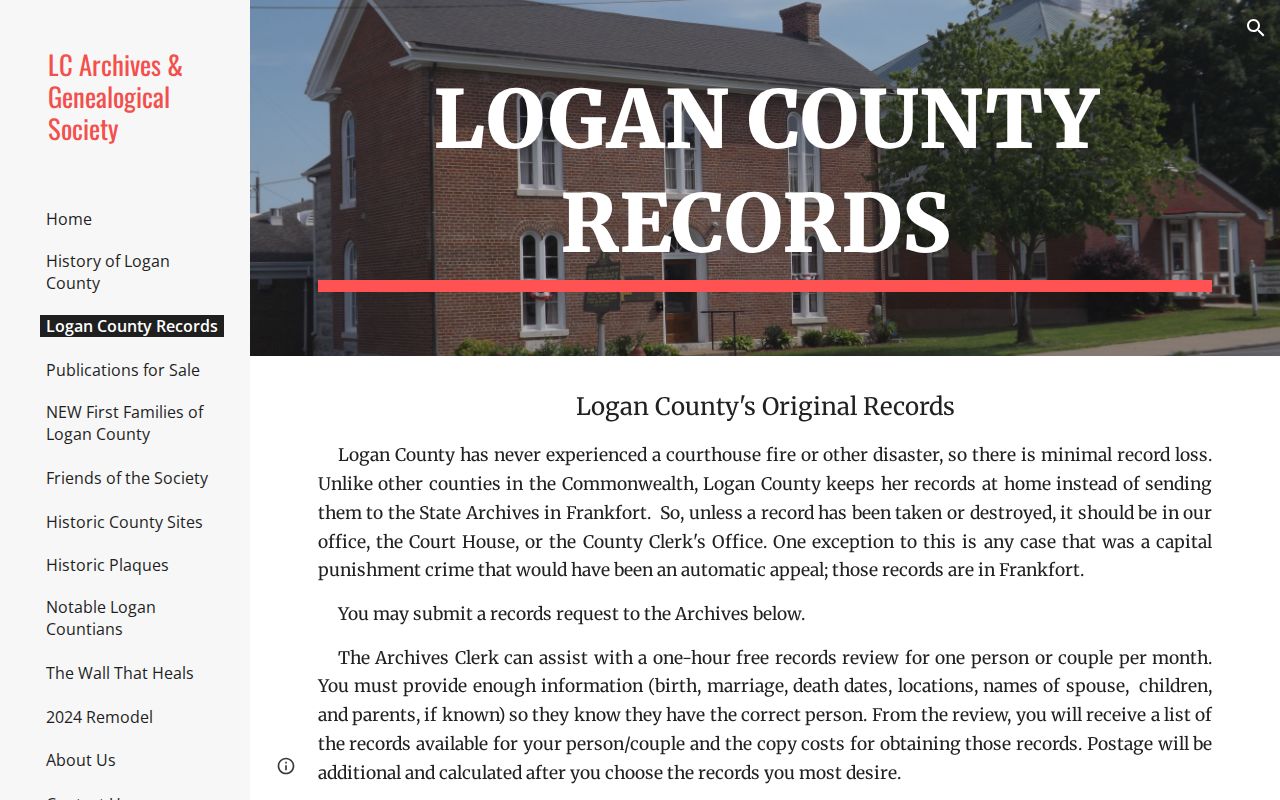
This local collection matters because Logan County keeps many of its own deed records at home rather than leaning only on statewide holdings.
Mortgages, Easements, and Releases Beside Logan County Deeds
A title trail fails if it tracks transfers but skips encumbrances. Search Logan County mortgages and assignments under both lender and borrower names. Then hunt for the release or satisfaction. A vendor's lien may hide inside the deed itself and get released in another series.
Easements are indexed against parties and parcels alike. Restrictive covenants, development plans, plats, and leases can add rights or limits. They do so without moving full ownership. A power of attorney can explain a signature. Its later revocation may matter just as much.
Wills and Descent Instruments in Logan County Deed Records
Logan County land can pass through a probated will recorded with its order, an executor's deed, or an affidavit of descent under KRS 382.120. Search the decedent, spouse, fiduciary, heirs, and estate name as both grantor and grantee. The court case opens the door to the probate file, while the County Clerk holds the recorded instrument tying the estate to the land.
Keep the case number, legal description, book-page, and filing dates. Never infer a transfer from an obituary or docket entry alone. An affidavit or fiduciary deed may name several heirs or representatives, so keep each role intact and check whether the instrument conveys the whole tract or only a stated share. A family name in the probate file does not place that person in the recorded chain of title.
A Preservation Grant for Logan County Recording Books
Fiscal Court minutes from March 11, 2025 record Clerk Stacy Watkins announcing a $38,000 KDLA grant to preserve multiple recording books at Logan County Archives. That is direct evidence of active preservation work, not proof the books are searchable online.
When requesting an older volume, ask whether the source exists as an original, microfilm, archive scan, or abstract. Record the reel, series, book, and page so another researcher can reproduce the citation.
Requesting a Logan County Deed Copy
Try the eCCLIX image route for covered years first. Then contact the Logan County Clerk at 229 West 3rd Street in Russellville. You can also use mail at PO Box 358 or call (270) 726-6061. Give the instrument type, names, and approximate recording date. Include a parcel or legal-description clue. Add the book-page or instrument number if you have it. Ask whether a plain or certified copy is available and what fee currently applies.
For older Logan County deed records, pair the Clerk request with Logan County Archives. KDLA can also help where useful. Never treat a screenshot, abstract, or index row as a certified copy.
Recorded, not guaranteed. The Logan County deed index identifies filings, but it is not a title opinion. Read the instrument and obtain qualified help when clear title is at stake.