
Identify a Logan County Property Owner
Ownership research starts with the parcel, not with a hunt for personal data. The Logan PVA qPublic entry point accepts an address. It also takes an owner name, parcel ID, or alternate ID. Pull up the matching parcel card. Copy the owner field exactly as shown. Keep the mailing address apart from the property location.
Then take the name to the County Clerk's recorded land records. The grantee on the latest deed is the confirmation that matters. Its source-of-title clause, legal description, and book-page reference tie that name to the same land. This approach answers who owns a Logan County property. It does not treat the assessment roll as certified title.
- Find the address in the PVA system and copy the parcel, account, owner, situs, mailing, and legal-description fields.
- Use the deed book-page from the sale row when one appears, or search the owner as grantee in eCCLIX.
- Compare the deed's parcel description and prior source with the assessment card. Check that the record is the most recent conveyance.
- If an entity holds title, review its Kentucky Secretary of State filings while keeping the deed as the ownership proof.
Logan Ownership Sources Compared
Several records display an owner name. They do not carry equal weight, and they update on different schedules. The PVA is the fastest route to the assessment owner. The Clerk's deed is the recorded transfer itself. A plat or GIS map repeats parcel context without proving title. Business filings can explain an entity's organization. But they cannot show that it owns the land.
| Source | Owner Info It Gives | Access |
|---|---|---|
| Logan PVA roll | Owner, mailing, situs, parcel, assessment | May lag a recent sale |
| County Clerk deed | Grantor, grantee, legal description, recording | Confirm the newest instrument |
| qPublic map context | Mapped parcel tied to assessment data | Identification only |
| Kentucky SOS filing | Entity status, agent, filed documents | Does not prove parcel ownership |
An owner of record is not the same as an occupant. A parcel may sit in a trust, an estate, a company, or a public body, or belong to someone whose mail goes elsewhere. Public ownership records do not establish who lives at an address. They also do not authorize contact that invades privacy or causes harm.
Read the Logan PVA Owner Field
The official Public Service Commission exhibit reproduces Logan PVA parcel reports. These reports carry separate owner, mailing, location, parcel, account, description, class, tax district, and sales sections. One sample lists the Logan County Agricultural Extension District. It shows a Russellville mailing address and a zero-number John Paul Avenue location. Another shows an LLC whose mail goes to Bowling Green. The parcel situs stays in Logan County.
Those samples show why the owner name, mailing address, and situs must stay distinct. An out-of-county mailing address does not move the property. An institutional owner is not the same as an individual officer. The sale table can help locate the deed through its book-page column. The displayed sale type and price still need the recorded instrument for full context.
Confirm Logan Owners in eCCLIX
The Logan County Clerk online-records page says eCCLIX covers Logan land records. The coverage runs from 1980 to the current period. Logan residents searching Logan records for personal, noncommercial use may receive five searches per day. There is no charge for those. The Clerk publishes no description of the exact grantor-grantee filters or image access. A searcher should not assume either.
Search the assessment owner as a grantee. Look for the most recent deed tied to the parcel's legal description. Record the instrument type. Note the recording date, book-page or instrument number, parties, consideration notation, legal description, source of title, and return address. If no image is available, call or visit the Clerk at 229 West 3rd Street in Russellville. You can also send a narrow copy request.
Logan Entity Owners Need Two Records
An LLC or corporation on the assessment roll calls for two checks. First, verify the exact legal entity as grantee on the deed. Second, run the Kentucky Secretary of State business search to review status and filed documents. Its controls include a search-category dropdown, search text, and an active-entities-only box. Uncheck that box when an inactive entity may still appear in an older deed.
Business records may list officers, members, and managers. They may also show a registered agent and a registered office as of a filing cycle. None of those people becomes the property owner merely by holding a role. Trusts are not covered by the officer search in the same way. For either form of ownership, the latest recorded deed remains the central land record.
Estate Transfers Change Logan Owners
A death does not automatically reveal who now owns a parcel. Logan estate property may move through a fiduciary deed, executor's deed, administrator's deed, survivorship deed, affidavit of descent, probate order, or court-approved sale. Search the decedent, spouse, estate, fiduciary, and heirs in the relevant indexes. Then match each instrument to the legal description.
The Logan County Clerk records wills with the probate order and describes affidavits of descent as records identifying the deceased, residence, death date, marital status, heirs, relationships, and interests. Probate begins in District Court. An obituary or assessment owner is only a lead, not proof of the transfer. Confirm the court order and the recorded follow-on instrument.
Logan Owner Terms Made Clear
Ownership records use a few terms that sound alike but serve different roles.
- Owner of record
- The party carried on the assessment roll at the time of its update.
- Grantee
- The party receiving the interest described in a deed.
- Title
- The legal ownership interest and its claims, which a name on one public screen cannot fully prove.
- Situs
- The location of the property, separate from the owner's mailing address.
- Recording lag
- The period between a conveyance and an update in another system.
These labels keep the method precise. The newest deed may beat the PVA roll after a recent closing, while a later probate or court instrument can shift the chain of title again.
DOC ALERT Watches Logan Filings
The Clerk's DOC ALERT service lets any person or business register a name and email for notice the moment a deed or mortgage bearing that name is filed in Logan County. An alert is only a flag. It does not establish identity, ownership, or fraud. Names collide, so treat the notice as a prompt to pull the filing itself. The recorded document supplies the parcel number, the parties, and the details that matter.
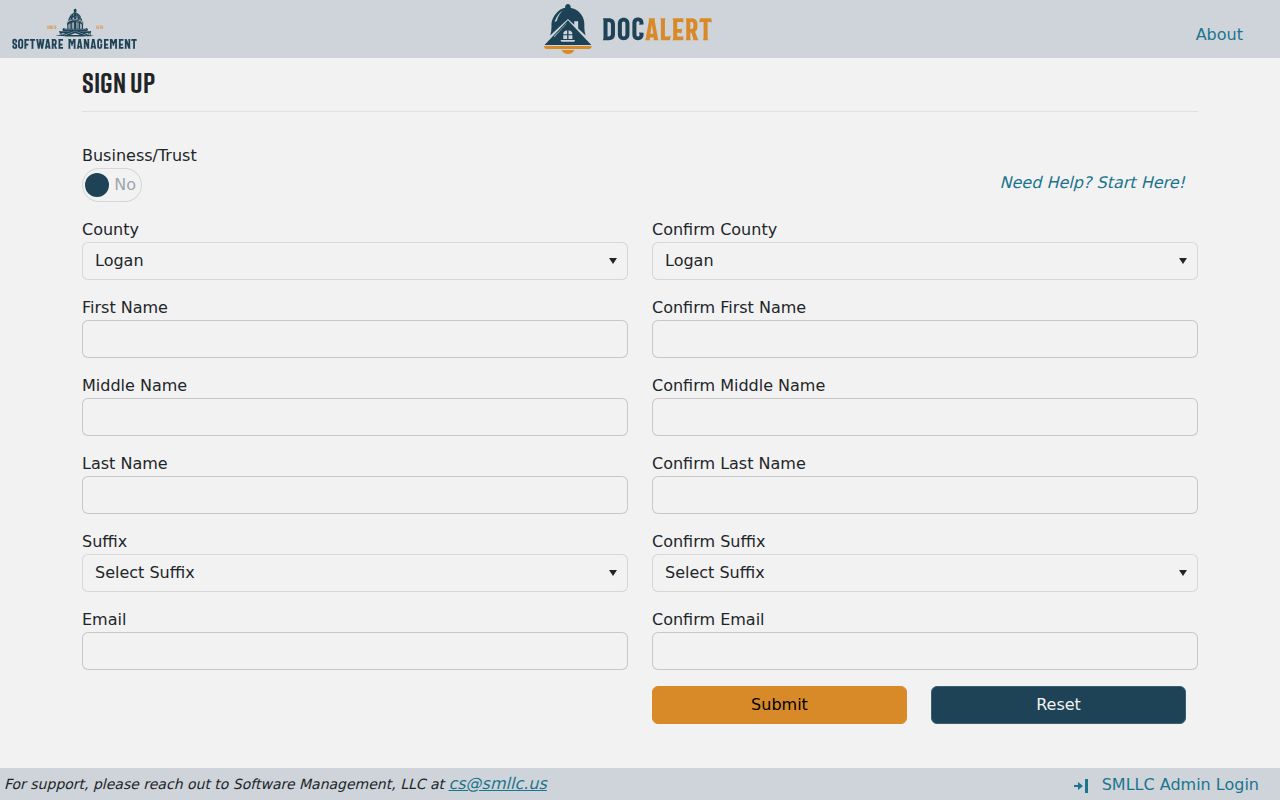
A DOC ALERT notice is only a pointer, not the instrument itself. Open the underlying filing and confirm the details directly with the Logan County Clerk before acting on them.
Limits of a Logan Owner Lookup
A who owns this property lookup ties a Logan County parcel to an assessment owner. It also ties the parcel to a recorded grantee. That is real information. It still cannot confirm occupancy. It cannot name the beneficial interests behind an entity or trust, or surface unrecorded claims. Deed validity, lien priority, and marketable title all sit outside its reach. A map outline will not settle legal bounds either. When the answer affects a purchase, an estate, a boundary, or a disputed claim, pull the instruments. Then get qualified Kentucky advice.
Kentucky Safe at Home gives eligible participants a substitute address for many public records. State guidance is clear that it does not hide real-estate holdings. Respect every redaction. Never combine public sources to reverse a protected address. A property owner search supports lawful parcel research, not the targeting of a person.
Lawful use. Logan County owner records may support purchase diligence, estate work, boundary questions, and civic review. Never use owner information to stalk, harass, intimidate, or harm anyone.